AI - A Writer's Remorse
(all words and images in this post are by a human)

When is it ok for writers to use AI in their writing?
Trick question.
NEVER.
I now know this, thanks to my dead cat.
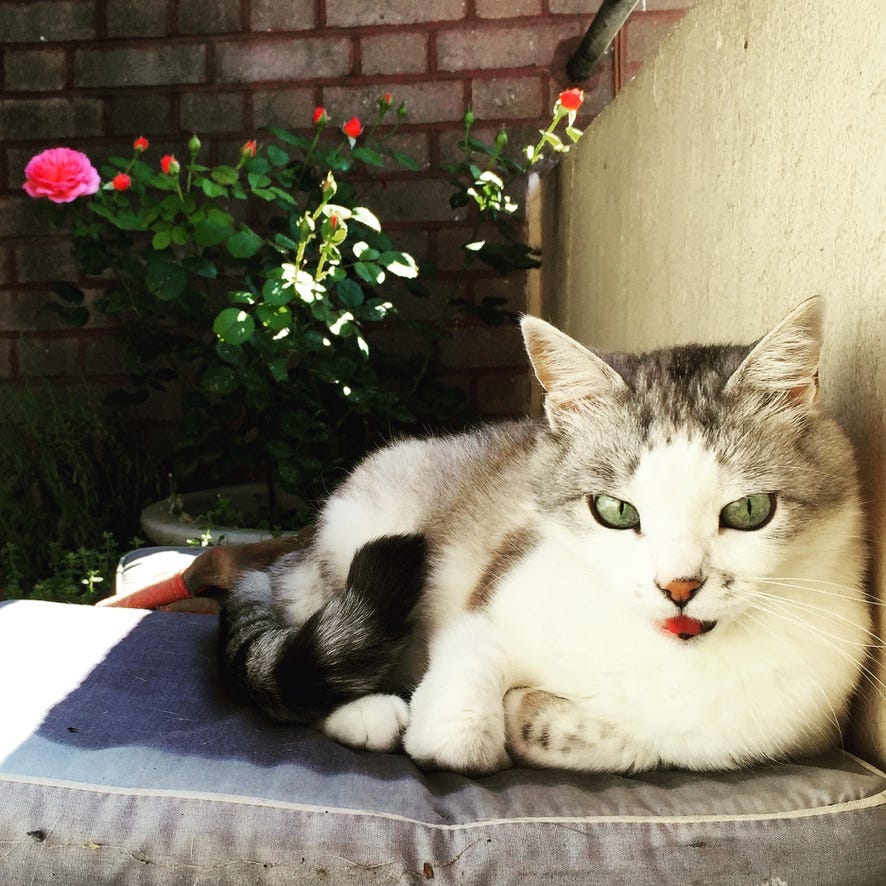
After she died, I had an icon painted of her. We found each other in the snow in 2004 in Moscow. She was beautiful and we were inseparable for the next 18 years. We lived in Moscow, then London, then Norfolk. We moved 10 times. I had umpteen different boyfriends, heart broken multiple times, got into various scrapes, so did she. Needless to say, Malinka, for that was her name, provided me with a lot of material to write about, but I never wrote her story - I never found the form, and none of it seemed good enough for her.
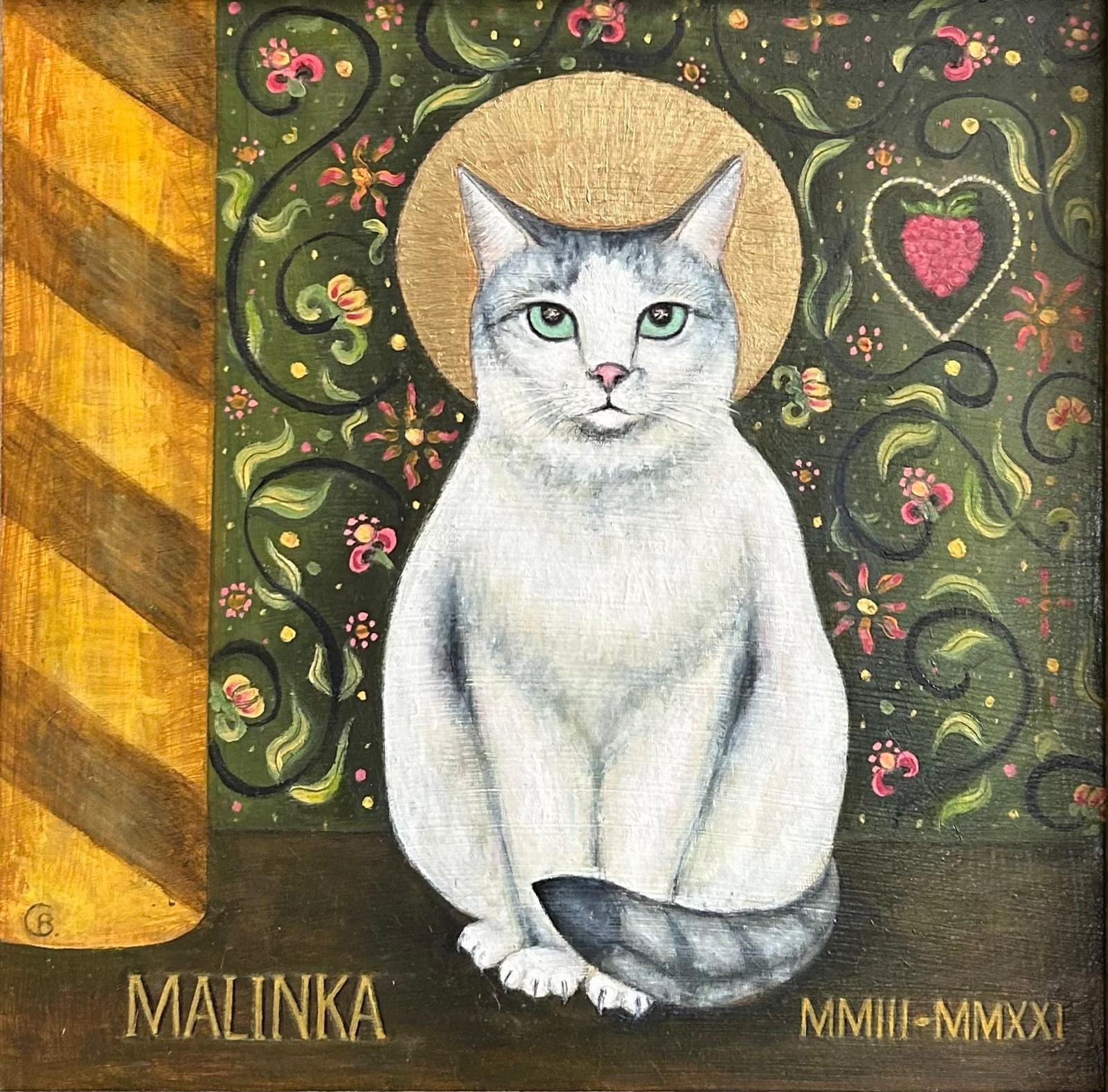
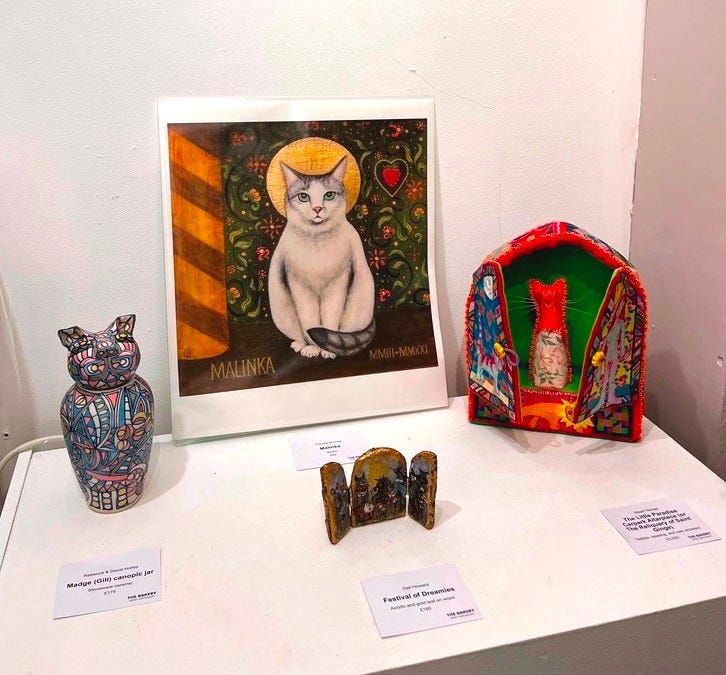
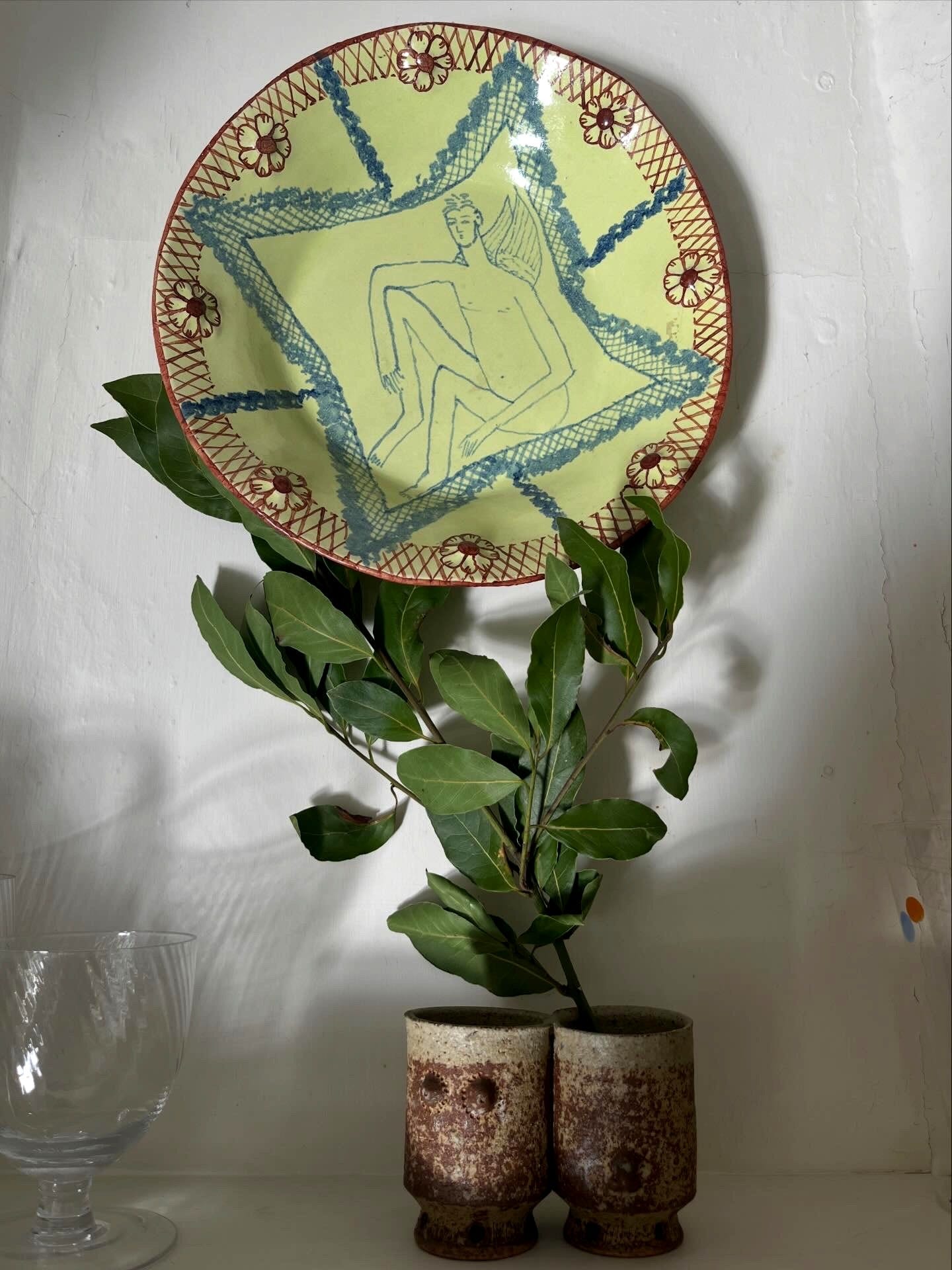
After Malinka died, I commissioned a painting of her as an icon by the brilliant Claudia Bonney. This painting was in an art show in London last month and I decided to finally write some text to accompany the prints that were made for it.
Because I’d tried and failed to write about Malinka a number of times, I found it hard to arrive at the task with fresh eyes, so as an experiment, in a moment of idleness, I asked AI to write a Vita, or ‘Life of the Saint’ of her. I fed it a few details of her life.
My initial response to what AI had come up with was, ‘wow, good job.’ My brain, used to humans, treated it as if someone had written it, but of course they hadn’t. It had been cobbled together from the stolen words of hundreds of unacknowledged writers.
I proceeded to work the piece over until it was about 30% AI and 70% me.
On arrival at the exhibition, the curator asked me to read her the piece. After all, we had met on a writing course and she was curious to hear it. As I launched into it, the words turned to ash in my mouth. The first paragraph was pretty much fully AI. I stopped reading. I read in the curator’s eyes judgement and disbelief (she was actually preoccupied with the upcoming opening and had no idea that it was AI).
That judgement and disbelief were what I was feeling towards myself.
The trouble with creating something ‘with’ AI is that if one has put even a drop of creativity into a piece of work, it is natural to want to claim it. But now I know - due to this visceral reaction that this is not how I want to work with AI.
I feel some embarrassment writing this post. ‘Wasn’t this bleeding obvious to you before you tried it?’ I hear you ask. But some of the best lessons are hard won, and all of us are going to have some kind of reckoning with AI. The question is, would I rather leave something I was blocked on unwritten and I think the answer is YES - I would rather leave it unwritten by me and use AI in a different way, if I’m going to use it at all - for example use it for prompts to help me write it rather than get it to write it for me.
My AI experiment did not help me create work, it just created work. It took the creative spark out of my hands and made something. And it made something pretty good. But if I am not going to experience the joy of creation, even of a silly little funny little text, then what is the point? I am an Artist’s Way girl and Julia Cameron believes that: ‘We are, ourselves, creations. And we, in turn, are meant to continue creativity by being creative ourselves.’ (See the other Basic Principles of The Artist’s Way here). Handing over my creativity to a machine is failing myself as a human-being.
I am clear that using AI in this way is life-shrivelling for me. But how to decode what is going on in the world? What we can ask for, I believe, is honesty - a clear system of declaration. I’m now vigilant about the ways artists use AI. I’m curious about how it sits with them. A lot of artists like being playful and where is the line between playfulness and deceit? Do they sign the work? After all, AI doesn’t have a signature; it is the invisible thief.
I came upon a Chechen, Russian-language singer on instagram. She was beautiful, impassioned, the lyrics were amazing, the singing was incredible. Then I read the comments, most of which were people trying to work out if she was a real human or not. She isn’t. What she is, it turns out, not that her ‘creators’ have been explicit about it, is part of a larger movement of human-managed AI.
Humans managing AI creations is a category in and of itself. And in the hierarchy of creativity it is awarding itself a place. The creators of these ‘singers’ are skilled in using AI - they are inputting a lot of material to get the result that they are after. But what they are inputting exactly we do not know, as they are not divulging, just as I didn’t own up to my Life of a Saint of my dead cat. These creators are not baddies, they are no doubt going through their own angst around what kind of authorship they can assign to their AI co-creations.
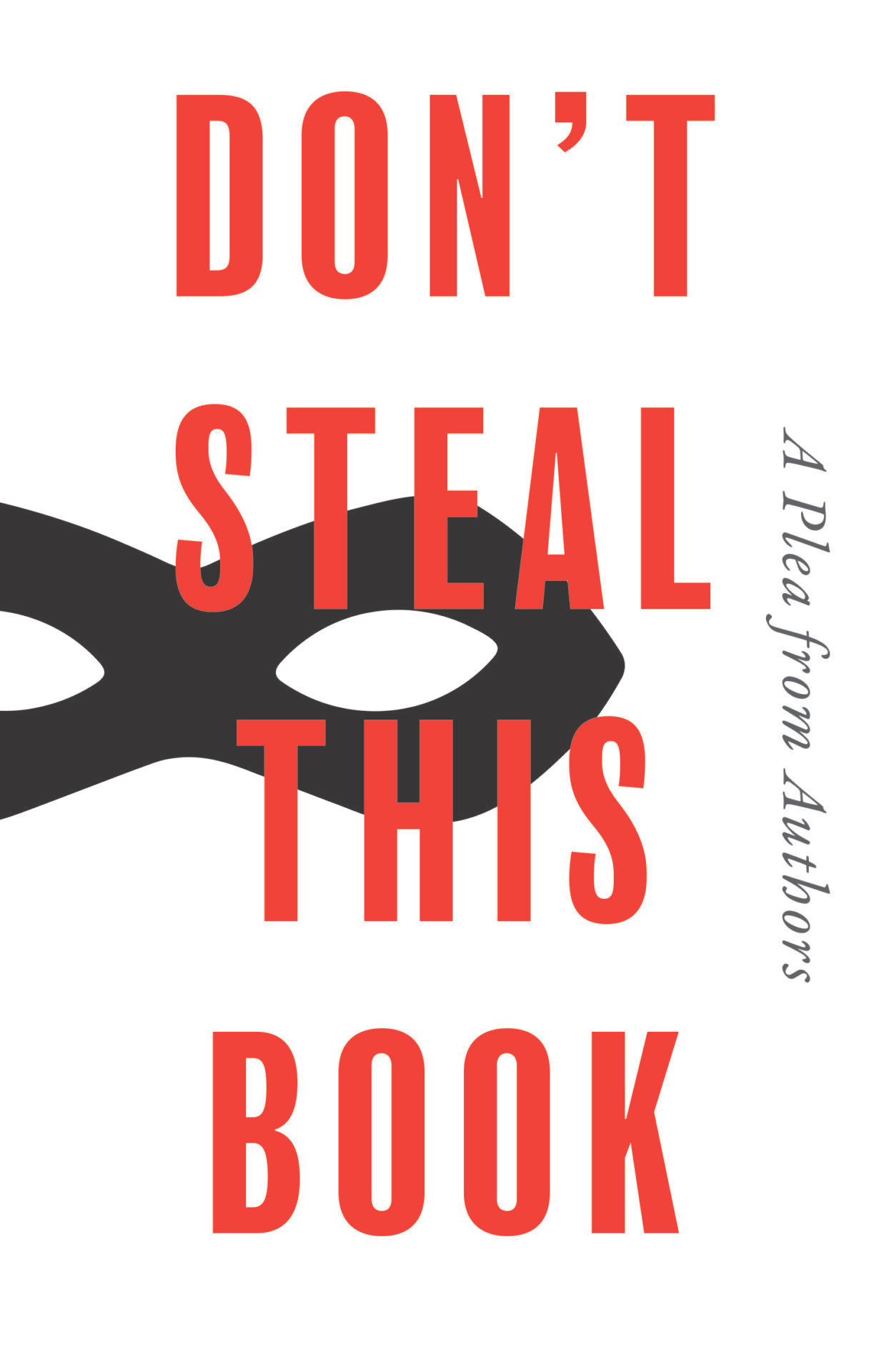
Since my experience with Saint Malinka, I have joined the The Society of Authors in order to support their pro-human, anti-AI initiatives including their Human Authored Scheme (books will have a stamp on the cover declaring them Human Authored, yes we live in strange times.) Also see this haunting and powerful initiative: Don’t Steal This Book.
And AI is not only being used in the writing, but also in the solving of writerly dilemmas. A lot of people are using AI as a therapist and coach. I get it, it can help answer a lot of our dilemmas and navigate our way through the world, but nothing replaces an hour spent with another human being, who is reflecting back to you, and empowering you to find solutions within yourself. That is not replaceable by AI.
I recently trained as a life coach, precisely because concentrated time with an experienced fellow human focussing on something I needed to change, has led to miraculous results in my life. I coach writers and other creatives, but also anyone needing support in other areas of their lives. If you are a writer who would like to work with me, or have anything going on in your life that is overwhelming you - any change that you are trying to bring about - anything that is blocking you - and you want to talk to a fellow human rather than AI, get in touch. I am currently offering six free sessions to first comers. Please comment below if you would like a session. For more details and testimonials, see my website.
If you have enjoyed this post please consider buying me a coffee. I keep these posts free but would be tickled pink if you chose to support me in this way.
Thanks Clem -- great post. Thanks for your honesty and reflections!
A true story that I use as an analogy about AI with my secondary students: when I was a teenager I learned classical guitar. My teacher flat out refused to let me use an electronic tuner (today they're apps) to tune my guitar ... until I didn't need one. He insisted that I learn to tune my guitar by ear, before allowing me to get a machine to tune it for me.
The lesson: AI can be useful at times as a time-saver, in the way that an electronic tuner can be useful in, say, noisy environments. But AI must NEVER be used as a crutch, or as an alternative to us putting in the hard yards ourselves. And one more thing: we tell our students that using AI and passing it off as their own work is plagiarism, pure and simple. It's not something that professional or aspiring writers should ever do.
Really interesting read. Thanks for being honest. It encourages others to not put themselves through the same experience! Reading AI-authored text often gives me a creepy feeling: the harvested ideas are like too many lights flashing in sequence, all at the same intensity, rather than the more individual, if less incandescent, patterns of actual creativity.